


Listening, Even Imperfectly: A Social Worker's Perspective

In the work of supporting women through an unplanned pregnancy, creating a safe space is often spoken about. But in reality, it is not something perfect or scripted.
“It is to be willing to listen to them,” Vanessa shares, “even if imperfectly we are. It is to be human to others.”
Sometimes, that looks like continuing a conversation through a text message.
Sometimes, it is a phone call.
Sometimes, it is simply trying again, gently, without judgement.
“It’s just a start,” she adds. Because beyond the first conversation, what matters more is pacing.

aLife's SW Vanessa (Left) filming a podcast with aLife's former client, Reiko (Right). From shared laughs to words of encouragement, the conversation was a reminder of the power of supportive relationships and personal growth.
Walking at Their Pace
Rather than rushing into solutions, Vanessa chooses to slow down.
“My preference is to pace with the client and hear their worries, fears, and concerns,” she shares. “Thereafter, to suggest certain solutions and for them to ponder upon. In hopes that they would feel less afraid or guarded in such a fragile state.”
There is no pressure to decide immediately. No expectation to have everything figured out. Just space, to think, to feel, and to not feel so alone.
What Many Are Carrying
In her work, certain emotional struggles surface again and again.
“Fears, abandonment, and feeling conflictual,” she shares.
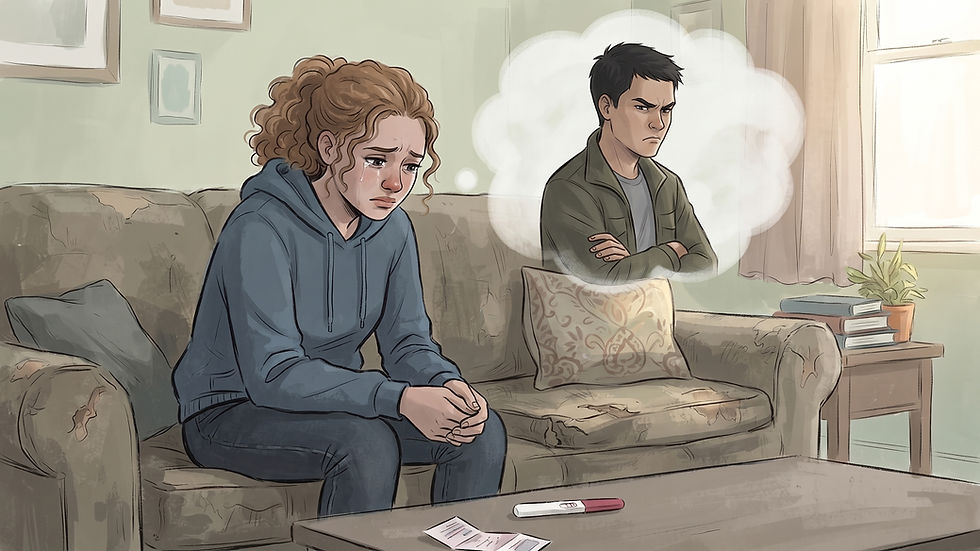
In Singapore, where life is often structured around planning and progress, an unplanned pregnancy may feel deeply disruptive.
Many women find themselves in the middle of:
Continuing their education.
Building their careers.
Navigating unstable relationships.
And in that space, questions begin to surface.
Can I continue?
Am I ready?
What will happen next?
These are not easy questions. And often, they are not meant to be answered all at once.
Supporting Without Directing
One of the quiet tensions in Vanessa’s work is knowing how to support without taking over.
Her approach is simple, but not easy: “To listen and reflect what they share.”
It means resisting the urge to decide for someone.
It means trusting that each person has their own internal compass, even if it feels unclear at the moment.
“So, I think it is best to hear from them and reflect based on the content that they convey, and to possibly build on that if relevant,” she explains. “It is a bit less of what I say and more of what they want.”
There is a quiet intentionality in this.
“I am here to facilitate that, not to impose,” she adds, “as everyone has a compass inside of them, but it requires some exploration to truly see where they are at, amid troubles.”
Because sometimes, what a person needs most is not direction, but space to slowly find clarity.
What Emotional Safety Really Looks Like
In a counselling setting, emotional safety is not just about saying the right things. It is also about recognising the limit of words.
“I try to provide a non-judgemental space as best as I can,” she shares honestly. “But I am also mindful that what I say might still be interpreted differently.”
So instead of focusing on what she should say, she shifts her focus.
As she shared, “It is a bit less of what I say and more of what they want.”
Listening becomes the centre.
Reflection becomes the tool.
And her goal is not to lead, but to gently walk alongside her clients.
Holding Care, While Holding Boundaries
Like many in helping professions, Vanessa acknowledges the tension between care and limits.
“Honestly, it is hard at times. I’m only human, and I do care.”
There are moments where the work extends beyond what is required, extra time and extra effort. Because the care is genuine.
At the same time, she recognises the need to step back when needed.
“I also have responsibilities outside of work, my family, friends, and my community.”
Boundaries are not a lack of care. They are what makes sustained care possible.
Even then, there are emotional moments that linger.
“When my support doesn’t fall through to the client enough to give them the support they need, I try not to take it too hard.”
Still, Vanessa holds on to this:
“My hope is that I can give them an alternative sounding board to go further than usual on certain beliefs or fears that could cloud their long-term wellbeing. I do my best and ultimately it depends on my clients’ will to overcome, and that applies to all of us as well.”
When My Client Begins to Open Up
Not every conversation starts easily.
“I think ladies, or even men, need a genuine space to talk in,” she reflects.
Some come in guarded.
Quiet.
Unsure.
“It would not always be foolproof,” she says. “Everyone who approaches us has different personalities and backgrounds.”
But something shifts when they feel accepted.
“It is to accept everyone no matter where they came from, their stories make them who they are and if they are willing to share, I am here to listen.”
“When they are allowed to share and feel supported in some way, they become more open.”
It does not happen all at once. But slowly, in small moments, walls begin to lower.
Heard and Held
At the heart of it, social work is not about having all the answers.
It is about presence.
About listening, even imperfectly.
About allowing someone to be seen, without judgement.
About creating space where they can begin to understand themselves again.
In an unplanned pregnancy, especially within the context of Singapore, that kind of space can make all the difference.
Because sometimes, being heard is what allows someone to feel held.
At aLife, we hold space for anyone navigating unplanned pregnancies, with dignity, care, and without pressure.


Comments