


Abortion Pill Reversal: What Every Woman Deserves to Know
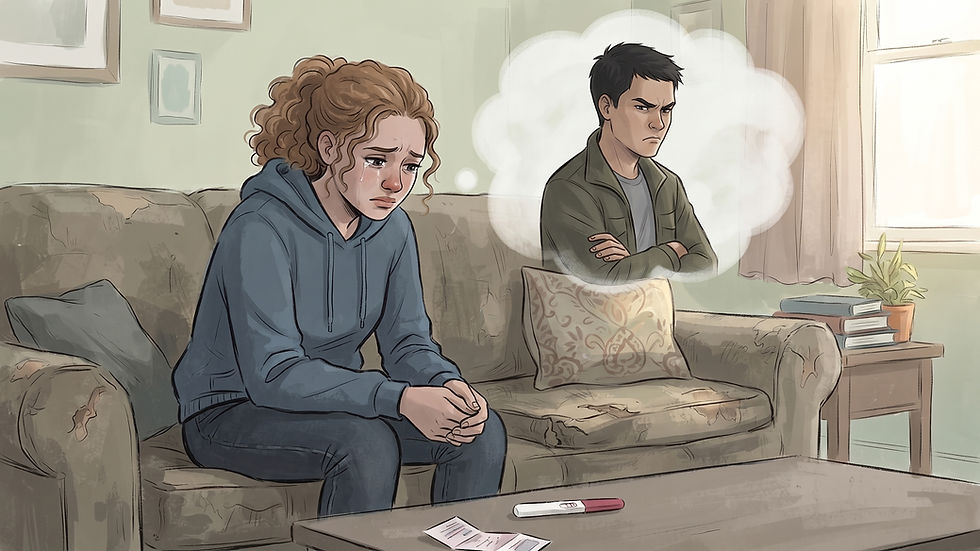
Unplanned pregnancies can bring overwhelming emotions such as fear, confusion, pressure, and urgency. In such situations, decisions are often made quickly, sometimes without the space to fully process what one truly wants.
For some women who choose a medical abortion, regret sets in soon after taking the first pill. This experience is more common than many realise, yet few know that there may be a very narrow window of time to seek medical advice, and treatment, to continue the pregnancy. This possibility is known as Abortion Pill Reversal (APR).
At aLife, we believe every woman deserves access to compassionate support and reliable information, especially in moments of distress or uncertainty.

Understanding the Abortion Pill
A medical abortion typically involves two medications taken in sequence.
The first pill, mifepristone, works by blocking progesterone, a hormone essential for sustaining pregnancy. Progesterone prepares the uterus for embryo implantation, promotes placental development, and suppresses uterine contractions. Without progesterone, the uterine lining begins to break down, separating the embryo from the uterus, causing embryo death.
The second medication, misoprostol, usually taken 24 to 48 hours later, causes the uterus to contract and expel the pregnancy.
For some women, emotional or psychological distress begins after taking the first pill, before the abortion process is complete.
What is Abortion Pill Reversal (APR)?
Abortion Pill Reversal refers to a medical protocol that some doctors use after the first abortion pill (mifepristone) has been taken but before the second medication.
The protocol involves administering progesterone by a capsule (oral or vagina) or injection, with the aim of counteracting the effects of mifepristone and supporting the pregnancy. Because mifepristone works by blocking progesterone, the intention of APR is to restore progesterone levels in the body, thus halting the abortion process. Progesterone administration increases the mother’s progesterone concentration level, improves the progesterone-receptor binding rate, and reverses the effect of mifepristone. Progesterone treatment continues through the end of the first trimester at a minimum, and beyond that if needed. Research has shown that 66% of women who receive progesterone soon after starting the abortion pill can safely continue their pregnancies.
It is important to understand that:
APR is time-sensitive.
It is not guaranteed to be effective.
It must be carried out under medical supervision.
It remains a subject of ongoing medical discussion and research.
Any woman considering this option should seek immediate medical consultation.
What APR Is Not
APR is:
Not a guaranteed outcome.
Not a do-it-yourself method.
Not something that should be attempted without a doctor.
Not widely available in all healthcare systems or countries.
Because of these realities, APR should never be presented or treated as a promise, but rather as information that some women may wish they had known earlier.
Is APR Safe?
Doctors have safely used progesterone during pregnancy for over 50 years. Major OBGYN medical organisations endorse APR as a safe and effective therapy.
In Singapore’s context
In Singapore, reproductive healthcare is carefully regulated and APR is not widely offered as a standard medical option. Access to APR may be limited, and availability can vary depending on healthcare institutions, medical providers, and regulatory considerations.
Possible side effects of progesterone
For some women, progesterone may cause:
Sleepiness / Lack of energy
Light-headedness / Dizziness
Headaches
Gastrointestinal discomfort such as nausea, bloating, constipation
Increased fluid intake may help relieve symptoms.
Will there be birth defects?
Progesterone has not been shown to increase the risk of birth defects when used in pregnancy.
Available evidence suggests that exposure to mifepristone alone, in pregnancies that continue, has not been associated with a clear increase in congenital anomalies. However, data is limited and ongoing medical research continues.
Success rate of APR
A 2018 peer-reviewed study by Delgado, G., et al., found that APR has a 64-68% success rate, of allowing the continuation of pregnancy after taking the first pill for abortion, mifepristone. However, the outcome of any women’s particular reversal attempt cannot be guaranteed.
If you wish to know more regarding the above mentioned research study, here is the link: https://pubmed.ncbi.nlm.nih.gov/30831017/
Why APR awareness matters
Many women feel rushed or pressured when making abortion decisions. When regret surfaces after the first pill, it can be accompanied by intense guilt, fear, and helplessness, especially when women believe that “it is too late” or that no one will support them anymore.
Even when outcomes are uncertain, information matters.
Awareness of APR:
Acknowledges that emotional responses can change.
Recognises that regret is real and deserves compassion.
Affirms that support should not disappear once a decision is made.
At aLife, we believe no woman should feel abandoned or silenced simply because she is uncertain or struggling after taking the first abortion pill.
Compassion without judgement
Choosing abortion, or questioning that choice, does not define a woman’s worth.
Some women feel peace after their decision. Others feel grief, regret, or emotional conflict. All of these feelings deserve to be met with understanding, not judgement.
Being life-giving means:
Creating space for honest conversations.
Supporting women even when emotions are complicated.
Recognising that care does not end at a decision point.
If you are feeling unsure
If you or someone you know has taken the first abortion pill and is feeling unsure, it is crucial to seek medical advice immediately, as any potential intervention is highly time-sensitive.
You are not alone, your feelings matter, and support is still available.
If you need a safe space to talk, ask questions, or process what you are experiencing, we are here to listen and support you with compassion and care.
Similarly, if you or someone you know is facing an unplanned pregnancy, you are not alone.
Reach out to us at 9183 4483.
Sources: Option Line


Comments